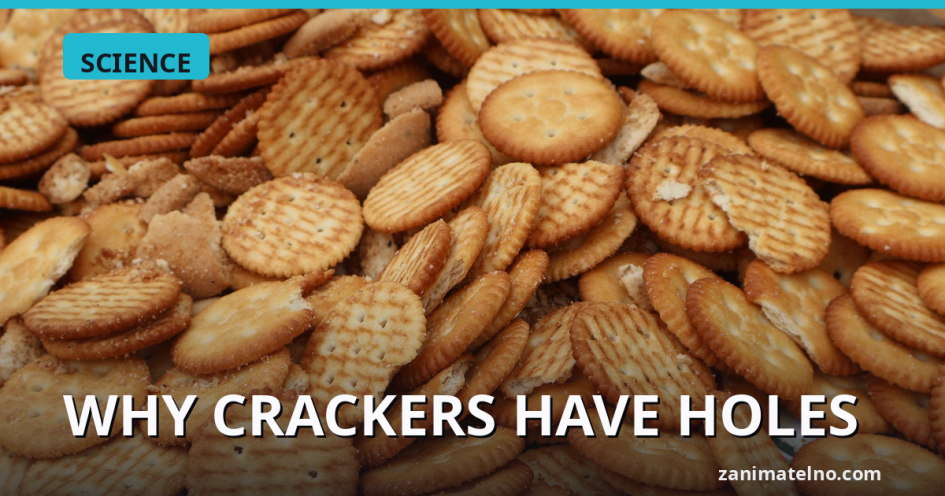
Crackers have holes so that steam can get out while they bake. Without them, water in the dough turns to steam, gets trapped under the drying surface and blows the cracker up into a puffy, uneven pillow that browns badly. Bakers call the holes docker holes and the job of making them docking.
What happens inside the dough
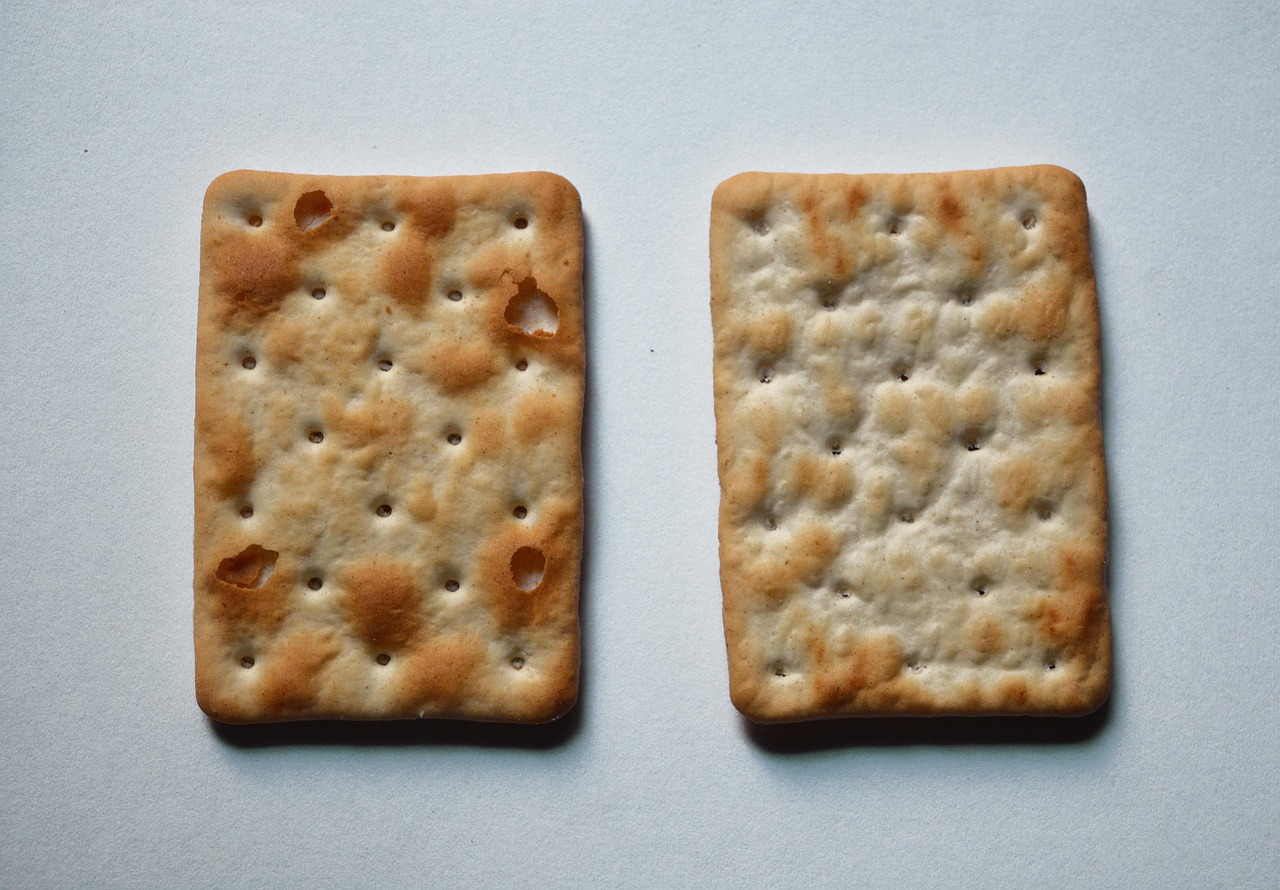
The clearest description comes from a patent, not a cookbook. In 2017 the snack company Frito-Lay was granted a patent, invented by Joseph William Kelly, for a system to control blistering in baked and fried snacks. It explains the problem step by step. As the dough heats, the moisture inside turns to steam and the piece starts to expand. The outer surfaces lose moisture faster than the center, because heat reaches them first. The surface dries into a skin, the steam cannot get through it, and the trapped steam pushes the top and bottom layers apart, leaving a hollow inside.
That hollow is the blister. On a pita it is the pocket you want. On a cracker it is a defect: the cracker comes out lumpy and uneven.
Why a few holes fix it
A hole gives the steam a way out before it can lift the dough. A Pizza Hut patent from 2010, for a machine that docks pizza dough, puts it plainly: the uncooked dough “is perforated or pierced to create dimples or divots that allow steam to escape, preventing large bubbles or blisters from forming during baking.” The same patent adds that big bubbles are not just unsightly but “susceptible to burning”.
The holes do not have to be large. On most crackers they are spaced out in a regular pattern across the whole surface, so that no patch of dough is far from a vent.
Holes as a signature
Docking holes have become part of what a cracker looks like. The Frito-Lay patent says so directly: its method can make the holes close up during cooking, which is useful “as consumers expect to see docking holes in crackers, for example, but do not desire to see docking holes in chips.” In other words, the same holes that are a flaw on a crisp are a feature on a cracker. People read them as proof that they are eating a cracker.
On many crackers the holes form a neat, recognizable pattern. It still does the original job. Every one of those decorative holes is an escape route for a little puff of steam.
Docking at home
The same rule applies in a home kitchen. Recipes for crackers, flatbreads, shortbread and blind-baked pastry cases tell you to prick the dough with a fork before it goes in the oven. Bakeries use a docker, a roller studded with spikes, to do it quickly and evenly. A fork is the simplest docker there is, and it works for the same reason: little holes, so the steam leaves quietly instead of lifting the dough.