Traffic cones are orange because in American road signage orange means one thing: temporary work zone. The federal rulebook for road signs gives each color a job, and orange belongs to temporary traffic control. A driver who sees orange is meant to know at once that the road ahead has been changed for now, by people who may be standing in it.
Orange is written into the rules
The rulebook is the Manual on Uniform Traffic Control Devices, published by the Federal Highway Administration. Its 2009 edition lists the general meaning of 13 colors. Red is for stop or prohibition, yellow for warning, green for permitted movements and direction, blue for services, and “Orange — temporary traffic control”. Fluorescent pink is reserved for incident management and purple for electronic toll lanes. Orange is the color of roadwork.
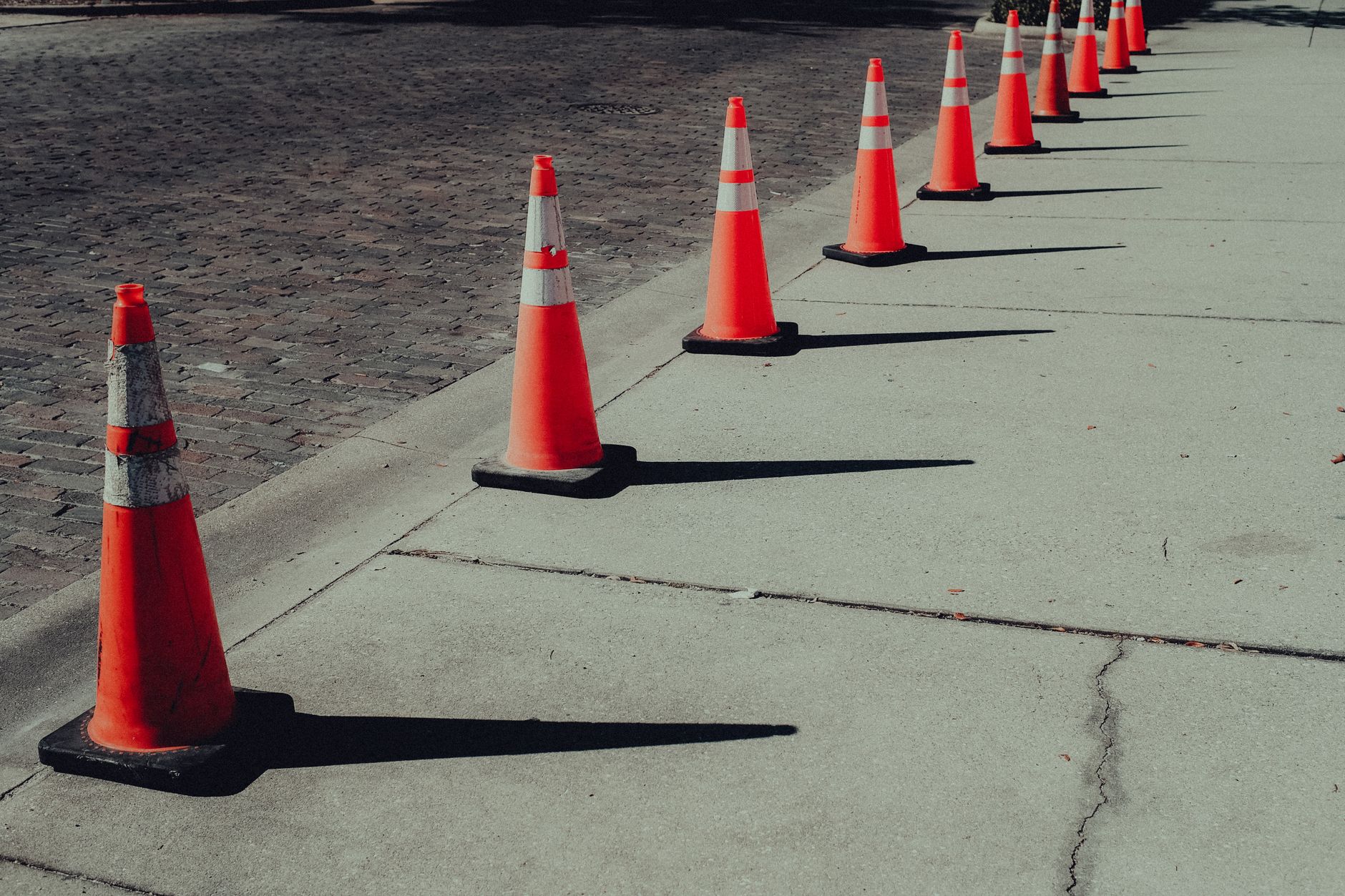
The same manual is specific about cones. Section 6F.64 says cones “shall be predominantly orange” and made of a material that can be hit without damaging the car that hits them. On daytime, low-speed roads they must be at least 18 inches tall. On freeways, at night or wherever more guidance is needed, they must be at least 28 inches. At night they need reflective white bands: on a cone of 28 to 36 inches, a 6-inch band near the top and a 4-inch band just below it. So the familiar look of a cone, orange with white stripes, is a federal standard down to the inch.
The first cones were made of old tires
The cone itself started with an inventor in Los Angeles. Charles D. Scanlon filed a patent for a “safety marker” on 17 February 1941, and it was granted on 2 November 1943. In the patent he describes markers “used on highways to indicate wet paint, pavement repairs, etc.” His recipe was thrifty. He suggests building the body from “the fabric of old automobile tires from which most of the rubber has been removed”, with a base of soft, resilient material, again ideally old tires.
His design already had most of what a modern cone has. It was hollow, so cones could be stacked inside each other. It had small feet under the base so it could stand on freshly painted lines without smearing them. And it was soft, so it could take a knock and spring back into shape. The patent says nothing about color, which arrived later with the rules.
Why orange works
The usual reasoning is simple: very little else on a road is orange. Asphalt is grey or black, vegetation is green, sky is blue and most signs are white, yellow or green. A fluorescent orange object stands out against all of them in daylight. At night the white reflective bands take over, catching headlights. The point of “predominantly orange” is presumably to make a cone recognizable as a cone before a driver has time to think about it.
Other traffic cone colors
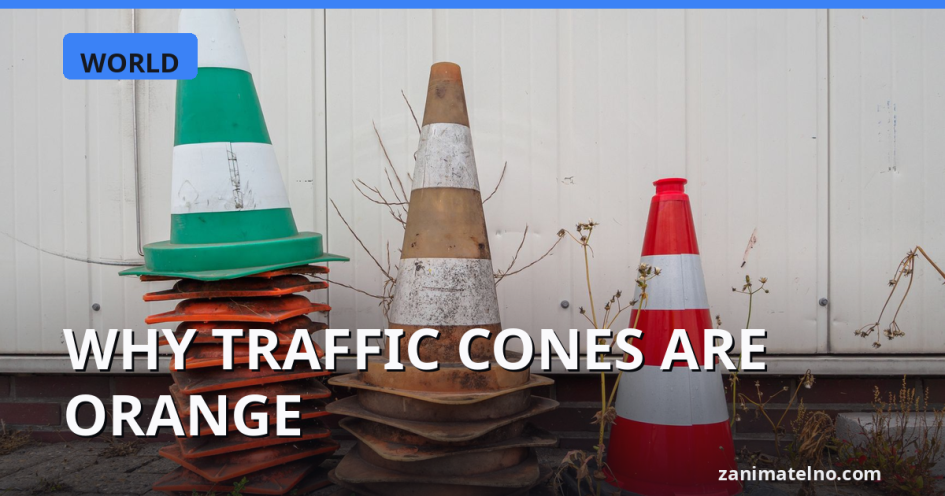
You do see cones in other colors: blue, green, yellow, white, even pink. Most of them live away from the public road, in parking lots, warehouses, sports fields and driving schools, where people pick a color to sort one thing from another. The work-zone rules care about the cone that marks a temporary change on a road open to traffic. That cone is supposed to be predominantly orange, because orange is the color the manual reserves for “this is temporary, slow down”.