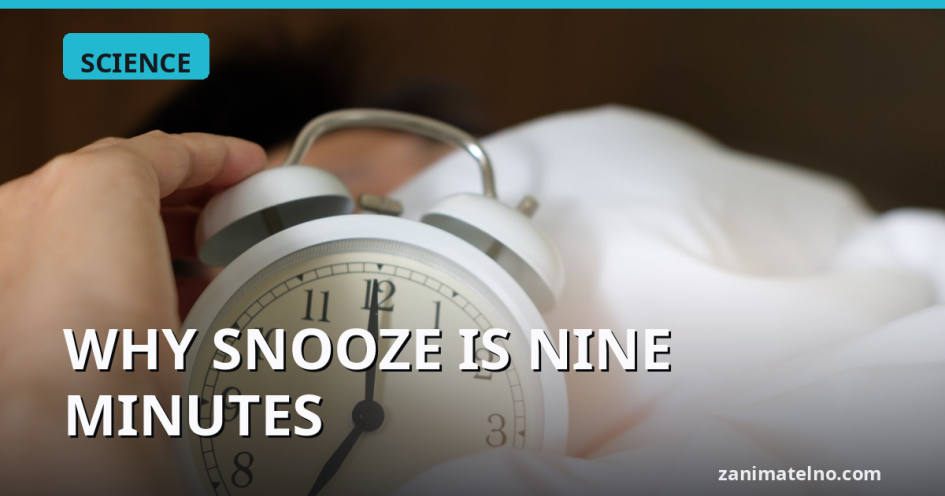
We could not find a single document that explains why the snooze button gives you nine minutes. The story you usually hear, that the gears in the first snooze clock could not be made to give exactly ten, does not survive a look at the old advertisements. The first snooze alarm, sold in 1956, promised ten minutes. A fixed nine minutes first appears in print in the 1970s, on the datasheets of the chips inside digital clocks.
The 1956 Snooz-Alarm
General Electric-Telechron made the first snooze clock, the Snooz-Alarm, in 1956. Its own magazine advertisement that October was clear: “tap the control bar to shut off alarm. Then take your 40 winks. In about 10 minutes Snooz-Alarm will wake you again, automatically!” A Life magazine ad that December promised “10 delicious minutes”.
In practice the first clocks were not that precise. The Telechron collector Jay Kennan, who timed an early example, writes that “the very earliest Snooz Alarms let their owners snooze for about 15 minutes (I timed mine to 16-17).”
Seven, ten, or your choice
For years after that there was no standard. GE’s own patents talk in round, loose numbers. One, filed in 1958, sets the delay so that “approximately 8 to 10 minutes elapse”. GE clock-radios of the late 1950s used seven: a 1957 Life ad says the Snooz-Alarm “sounds buzzer 5 times at 7-minute intervals.”
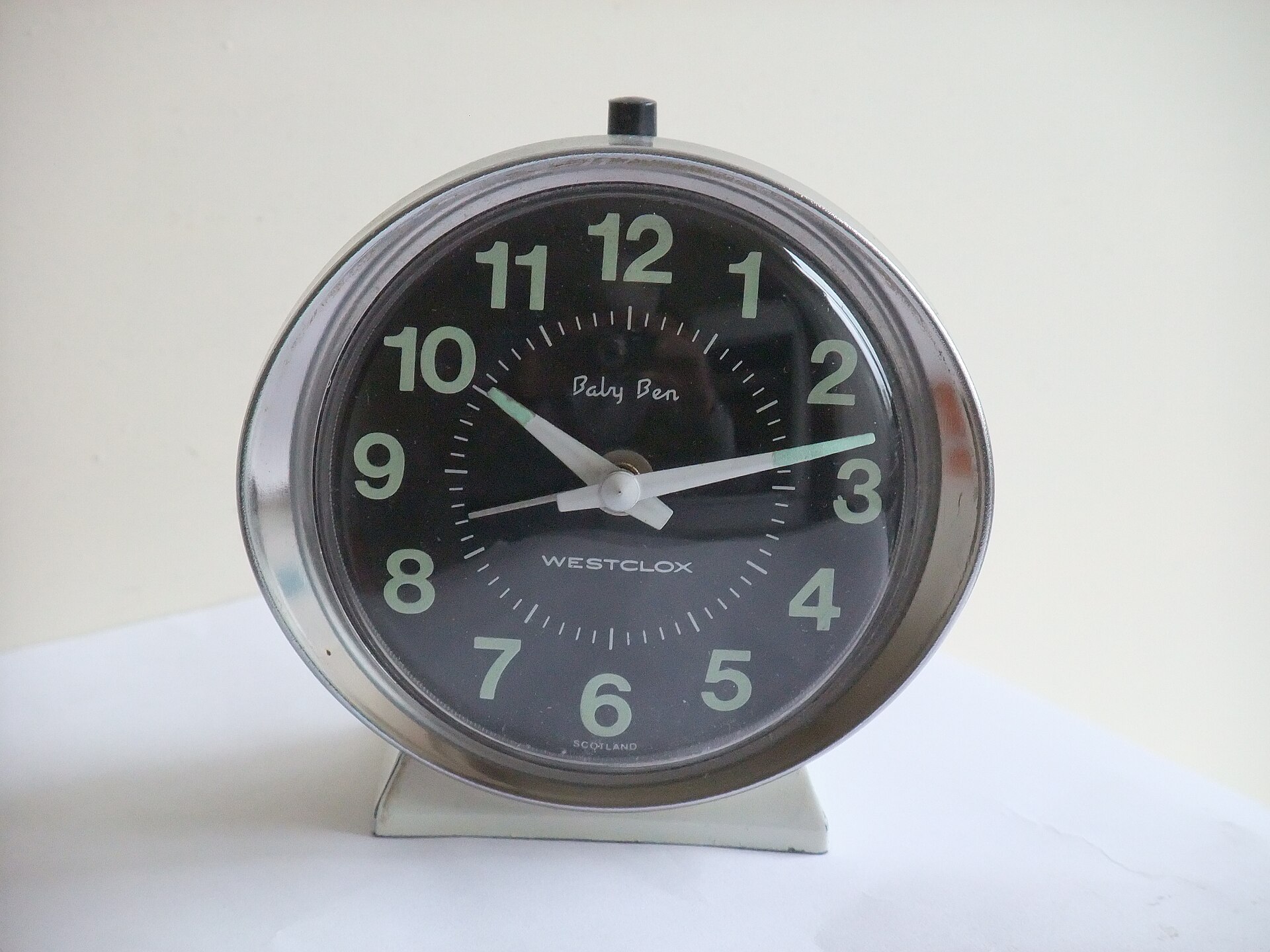
The rival Westclox Drowse, introduced in 1959, let the sleeper pick. A 1960 trade ad called it “the amazing electric alarm that lets your customers choose 5 or 10 minutes extra sleep”. That same year the product-testing magazine Consumer Bulletin described both brands as letting the sleeper “steal additional 5- or 10-minute intervals of sleep”. A General Time patent filed in 1964 still summed up the market the same way: “A popular feature of alarm clocks permits the user to sleep five or ten minutes after the alarm initially sounds.”
Where nine minutes appears
The number nine shows up with digital clocks. National Semiconductor’s 1974 databook lists, for its MM5316 alarm-clock chip, a “9-minute snooze alarm”. Read the technical description further down, though, and pressing snooze silences the alarm “for between 8 and 9 minutes”. By 1978 an Australian electronics magazine could describe ready-made clock modules in which every alarm included “a nine minute ‘snooze’ delay.”
Even then, not every chip maker agreed. National’s own MM5375 chip had a “6 to 8 minute snooze alarm”, and Intersil’s 1981 databook offered an 8-minute snooze that manufacturers could set anywhere from 2 to 14 minutes.
So why nine?
No manufacturer document we found explains it. In 1999 the newspaper columnist Cecil Adams, of “The Straight Dope”, collected nine theories, from focus groups to the claim that sleepers fall back into deep sleep after nine minutes, which he dismissed with “Yeah, right.” His own guess was that an early chip designer inspected an old mechanical snooze clock, “figured that a nine-minute snooze interval had been ordained by the clock gods, and built it into his chip”. He labeled it plainly: “That’s my theory, and I’m sticking to it.”
The habit carried over to phones. MacRumors reported in June 2025 that iOS 26 finally let iPhone owners choose a snooze from 1 to 15 minutes, ending a “rigid 9-minute default”.
What snoozing does to you
People snooze a lot. A 2025 study in Scientific Reports, based on a large global sample of smartphone users, found that more than half of the recorded sleep sessions ended with a snooze alarm. On those mornings people pressed snooze on average 2.4 times and snoozed for a total of about 10.8 minutes. Whether it harms you is less clear. A 2024 study in the Journal of Sleep Research found that 30 minutes of snoozing “improved or did not affect” performance on tests right after waking, while a small 2022 study in the Journal of Physiological Anthropology found snooze alarms prolonged morning grogginess. None of them gives a reason for the number nine.