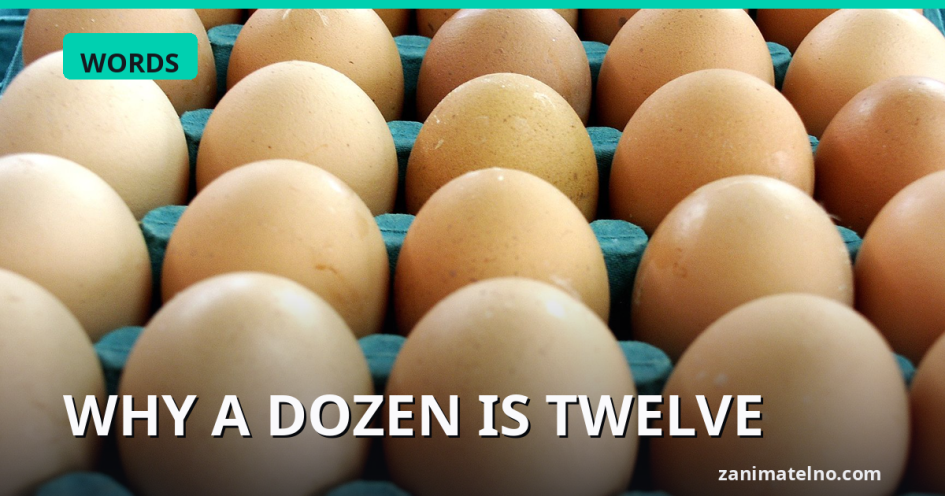
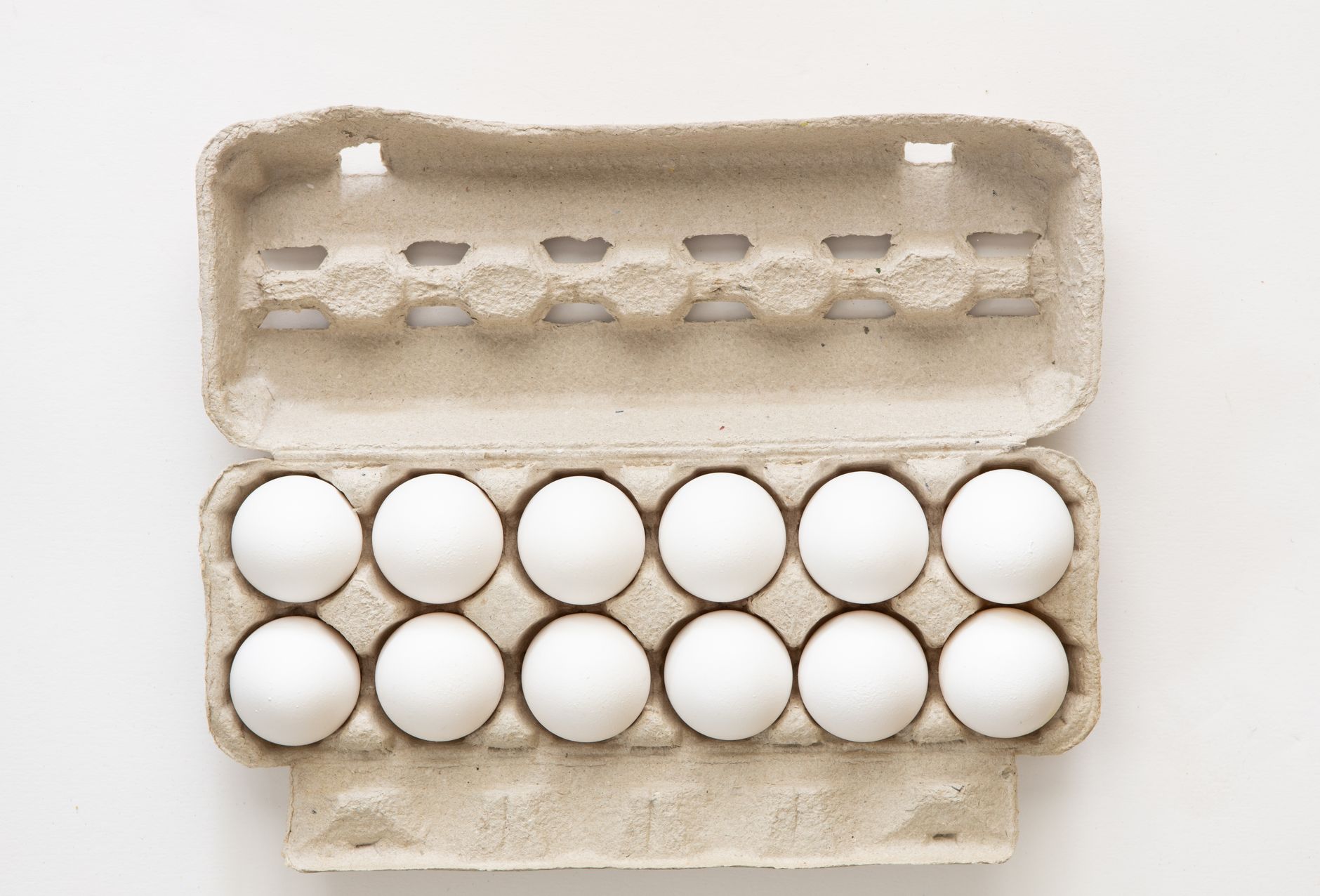
A dozen is 12 because the word literally means twelve. “Dozen” comes from the French douzaine, from douze, twelve, which goes back to the Latin duodecim: duo, two, plus decem, ten. The better question is why people bothered to have a special word for twelve at all. The answer is that twelve is unusually easy to share, and some ancient cultures counted in twelves.
What the dictionary says
Webster’s dictionary of 1913 traces the English word through older English doseine and Old French doseine to modern French douzaine and the Latin for twelve. Its first meaning is plain: “A collection of twelve objects; a tale or set of twelve.” It also records a second, looser meaning, “an indefinite small number”, the sense in which we still say “dozens of times”.
The same dictionary defines a gross as “twelve dozen; twelve times twelve”, and a great gross as twelve gross, or 1,728. Counting in twelves had its own ladder of words.
Twelve divides nicely
Twelve can be split evenly into halves, thirds, quarters and sixths. Ten splits only into halves and fifths. That matters to anyone selling eggs, bread rolls or pencils by the box: a dozen can be shared between two, three, four or six people with nothing left over.
The same arithmetic shaped money. Until 1971, as the University of Nottingham’s guide to old British currency explains, “One pound was divided into 20 shillings. One shilling was divided into 12 pennies.” The Royal Mint, which replaced that system with 100 pence to the pound on Decimal Day, 15 February 1971, describes the old arrangement as “a complex structure for everyday use”. Complex for adding up, perhaps, but a shilling could be divided many ways in whole pennies.
Counting on finger joints
Twelve also has an older history. Michael A. Lombardi, a metrologist at the US National Institute of Standards and Technology, explained in Scientific American that the Egyptians, as early as 1500 BC, had a sundial “calibrated to divide the interval between sunrise and sunset into 12 parts.” That division, he wrote, reflected Egypt’s use of a base-12 system, and “the importance of the number 12 is typically attributed either to the fact that it equals the number of lunar cycles in a year or the number of finger joints on each hand (three in each of the four fingers, excluding the thumb), making it possible to count to 12 with the thumb.”
Try it: touch each segment of your four fingers with your thumb and you reach twelve on one hand. Lombardi adds that the next generation of those sundials likely gave us the first version of what we now call the hour.
And the baker’s dozen
A baker’s dozen is thirteen, and the usual explanation is about fear of fines. The New International Encyclopaedia of 1905 says the custom “is supposed to have originated when heavy fines were imposed for short weights, and the bakers in particular gave an extra unit to secure themselves against a possible short weight.” In other words, the thirteenth loaf was insurance.
So the dozen survives for good reasons. It splits evenly into halves, thirds, quarters and sixths, and you can count to it on one hand.