
Skobeloff is a dark blue-green, hex code #007474, RGB 0, 116, 116. It sits between teal and deep cyan, and the name makes it sound like a Russian vodka. In fact it belongs to a Russian general, Mikhail Skobelev, which is odd for a green, because Skobelev was famous for dressing in white.
The colour itself
For anyone who came here for the code, here it is in the usual formats. Hex: #007474. RGB: 0, 116, 116, so no red at all and equal parts green and blue. The nearest web-safe colour is #006666, which colour code sites list as teal green. On a screen skobeloff reads as a cool, slightly muted teal, darker than turquoise and bluer than emerald.
The White General
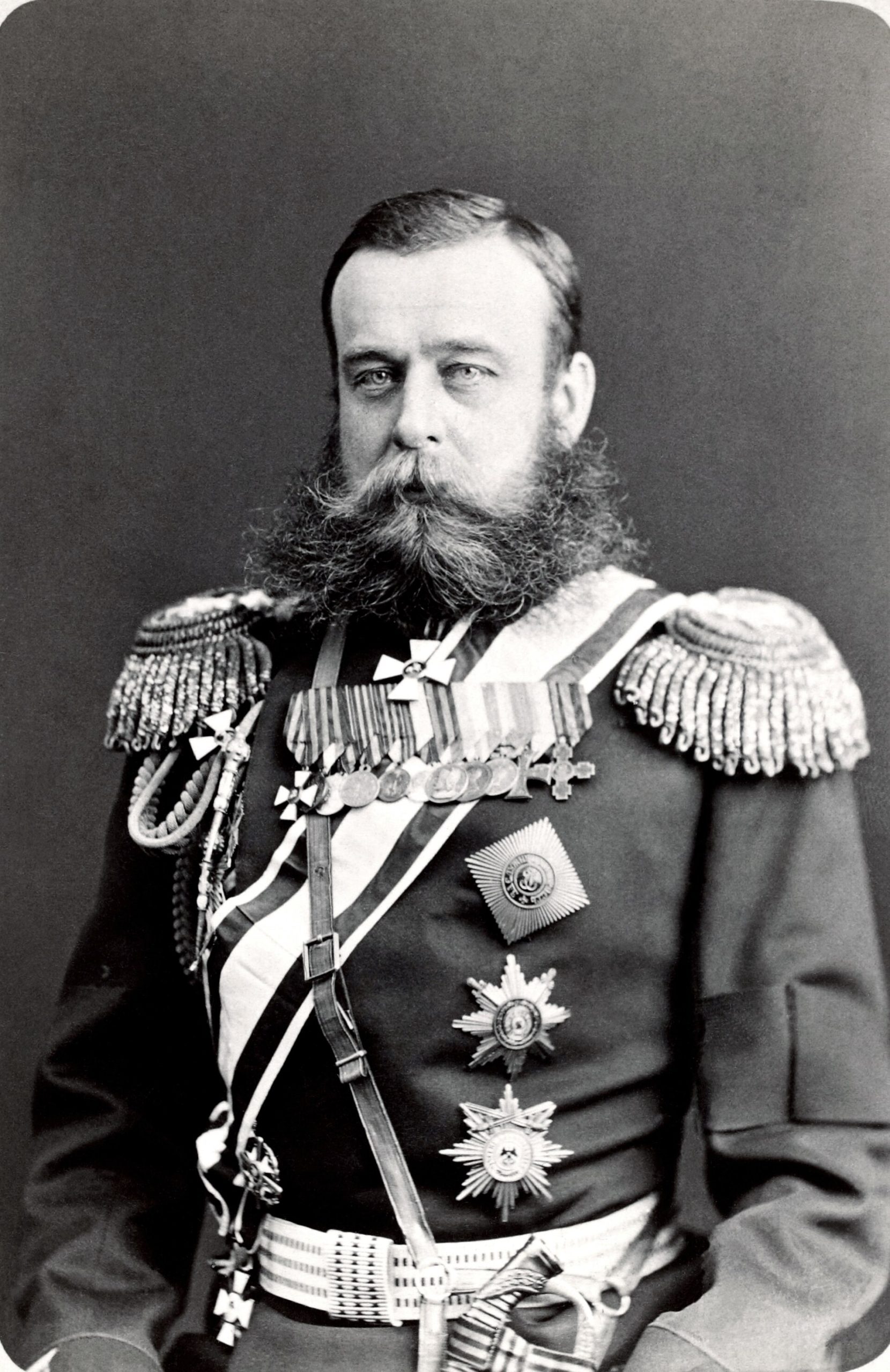
Mikhail Dimitrievich Skobelev was born near Moscow on 29 September 1843, according to the 1911 Encyclopaedia Britannica. He spent most of his early career in Central Asia, in the Russian campaigns against Khiva and Kokand, and became famous during the Russo-Turkish War of 1877. He fought at Plevna, and in January 1878 crossed the Balkans in a snowstorm and took, the same encyclopedia says, 36,000 prisoners and 90 guns at Senova, near the Shipka Pass.
He also knew how to be seen. Britannica describes him as “dressed with care in white uniform and mounted on a white horse, and always in the thickest of the fray”, which is how he became known to his soldiers as the White General. After the war he went back to Central Asia and in the campaign of 1880 and 1881 captured the Turkmen fortress of Geok-Tepe, a victory Britannica sums up with the words “after much slaughter”. He then turned to politics, gave fiery Panslavist speeches in Paris and Moscow, and was recalled to St Petersburg. On 7 July 1882, aged 38, he died suddenly in a Moscow hotel. Britannica gives the cause as heart disease.
How a general became a colour
Here the trail gets thin, and it is worth being honest about it. Colour reference sites all say skobeloff is named after the general. What we could confirm is that “Skobeloff Green” appears as a colour name in A Dictionary of Color by A. Maerz and M. Rea Paul, published by McGraw-Hill in 1930. Colour sites, following the same tradition, date the first recorded use of “Skobeloff green” in English to 1912. We could not check that date against an original source.
What Maerz and Paul do explain is how names like this came about. Their preface says fashion introduced new colours every season, and with them new names. “The names apparently need not necessarily describe the colors,” they wrote, “but must only possess sufficient oddness to impress themselves on the mind of the layman, for therein lies the sales value.” They add that fields well beyond nature had been “invaded for color names”, sometimes in ways they found hard to excuse. A famous name was exactly the kind of oddness that sold a bolt of silk. Skobelev was a war hero of the late 1870s who died young and suddenly. A fashionable green called after him is less strange than it sounds.
Why green, though, and not white? Nobody seems to know. No source we found ties the shade to his uniform, his regiment or any flag. The likeliest explanation is the one Maerz and Paul give for the whole business: the name did not need to describe anything. It needed to be memorable.
Why the name faded
By 1930, Maerz and Paul were already complaining that most season names were forgotten a year later, and that only names carrying some hint of the colour itself tended to survive. “Skobeloff” gave no hint at all. The general’s name survived mostly in reference lists, and more recently in hex-code generators, which is where most people now meet it.