We eat popcorn at the movies because, in the 1930s and 1940s, American theaters found it was the most profitable thing they could sell. It was cheap to make, it sold for many times what it cost, and when the Second World War cut the supply of sugar for candy, popcorn filled the gap. The habit stayed long after the rationing ended.
The snack the theaters did not want
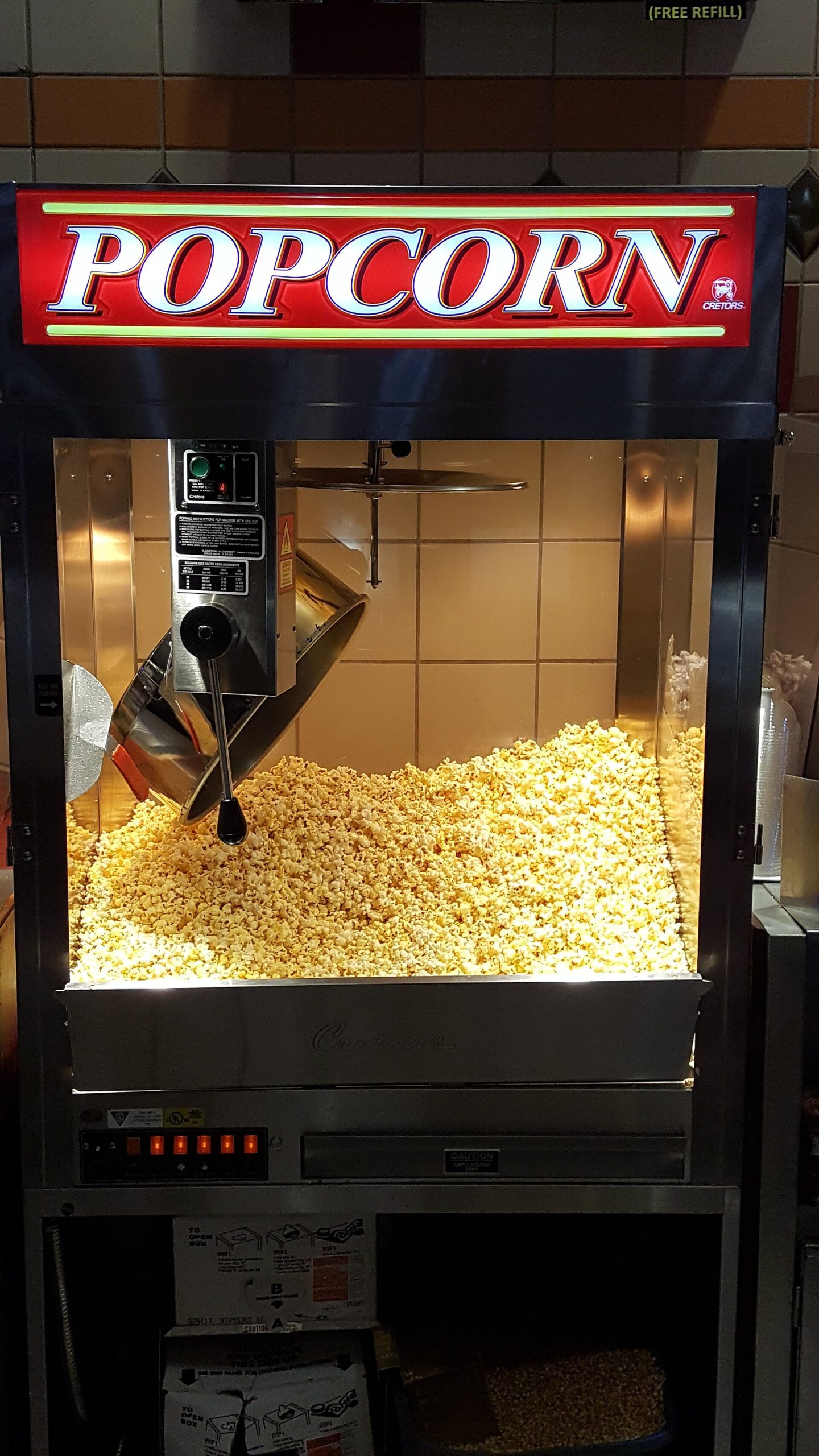
Popcorn itself is ancient. Archaeologists working on the coast of Peru found maize remains between 6,700 and 3,000 years old, and Smithsonian Magazine reported that some of the specimens show the ancient Peruvians used it as popcorn. In 19th-century America it was sold on streets, at circuses and at fairs. Chicago’s Charles Cretors patented a corn-popping machine in 1903, and his company dates its first commercial popper to 1893.
Movie theaters, though, held out. A 1938 textbook, Frank Ricketson’s The Management of Motion Picture Theatres, says it directly: “Popcorn machines are suitable only to small-town theatres or the cheap-admission-price houses of large cities.” In the same paragraph, Ricketson admits that a popcorn machine “is the most profitable by-product of theatre operation. Gross profits are three or four times the commodity cost.”
The trade paper Boxoffice summed up the objections in July 1940: popcorn “has been suspiciously avoided by many theatre owners because of undesirable odors, muss and noise caused by consumption within the theatre.”
The Depression changed the math
Hard times made the profit hard to ignore. “The depression taught many exhibitors that the popcorn concession consistently turns in a good profit,” Boxoffice reported from Kansas City in October 1938. Many theaters had leased their lobby stands to outside vendors. One local chain discovered it was receiving “only a pittance” from those leases and set up its own department to run stands in its 40-odd theaters.
The same 1940 article that listed the old objections also explained how they were solved. Popcorn now came in “small noiseless cartons”, and air conditioning and exhaust fans carried off the smell. The numbers were persuasive. The article put the cost of good popcorn at no more than “30 cents on the dollar”, broken down as raw corn 12 cents, salt half a cent, electricity a cent and cartons four and a half cents.
The war took the candy away
During the Second World War sugar was rationed, and candy makers got only a fraction of their old supply. In June 1945 the Motion Picture Herald reported that sugar for candy manufacturers was limited to 65 percent of the 1941 level, with further cuts expected. “The demands for popcorn as a substitute for candy has climbed considerably,” it wrote, especially in the West, Midwest and South. That spring a Daily Variety columnist complained that audiences now “crunch peanuts and popcorn”, which suited a western but was “hardly the proper tonal nuance for a love scene.”
The industry’s own Theatre Catalog for 1945 caught the mood. “America is eating more popcorn today than at any time in its history,” it said. New hybrid corn popped to more than 30 times its size. A 100-pound sack cost the theater under $28 with oil, seasoning and bags, and popped into more than $100 of sales. One owner, it reported, had come to think of his business “as a popcorn stand with a theatre in connection.”
Why it stuck
After the war the theaters kept the habit and polished it. In 1948 a survey run by a popcorn producer claimed that seasoning which “looks like butter, tastes like butter, and has the aroma of butter” almost doubled sales.
The economics have not changed much. In its annual report for 2025, the cinema chain AMC said its food and beverage costs were 19.6 percent of food and beverage revenue. Film rental took 48.1 percent of ticket revenue. Roughly half of a ticket goes to pay for the film. Less than a fifth of what you pay for popcorn and a drink goes on the food itself.