
The hat trick started as a real hat. In September 1858 an English cricketer took three wickets with three balls in a row and was given a new hat for it. The phrase that grew out of that prize later spread to horse racing and other sports and finally to ice hockey, where most Americans hear it today.
A magic trick first
Before it meant anything in sport, “the hat trick” was a conjuring act. The language historian David Wilton, who runs the site Wordorigins, traces the term to the Boston Morning Post of 26 February 1840, which praised a young conjuror called Master Young at the “N. E. Museum”: “what he calls ‘the hat trick’ is the cleverest thing in the legerdemain line we have witnessed for many a year.” Through the 1840s and 1850s the phrase turned up in reports of stage magic shows on both sides of the Atlantic. A hat trick was something astonishing done with a hat.
Three balls, three wickets, one hat
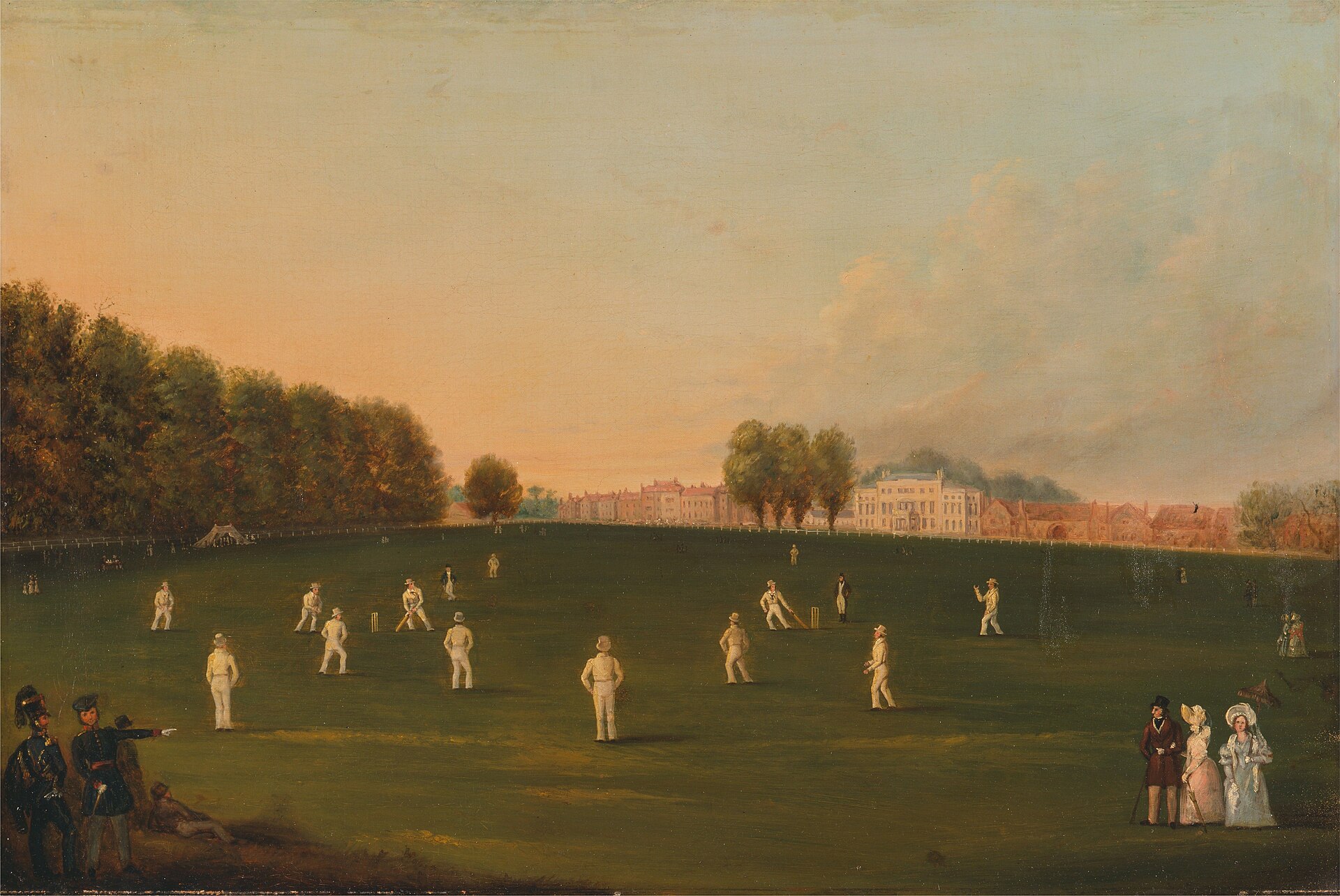
On 6 to 9 September 1858, the All England Eleven played a local side, the Twenty-Two of Hallam and Staveley, at the Hyde Park ground in Sheffield. The bowler H. H. Stephenson did something rare: he knocked out three batsmen with three consecutive deliveries. Bell’s Life in London, a sporting paper, reported it on 12 September: “he took three wickets in three successive balls, entitling himself to a new hat, which was presented to him by the Eleven.”
The wording matters. “Entitling himself” suggests the hat was an expected reward for that feat, not a one-off whim.
When the name appeared
The 1858 report does not use the words “hat trick”. Nobody knows who first joined the conjuror’s phrase to the cricketer’s hat. The earliest sporting use Wilton found is in the Chelmsford Chronicle of 23 June 1865, describing a local match in which a Mr Biddell “performed the hat trick by getting three wickets in the over”. By then cricket readers were expected to know what it meant.
From cricket to everything else
The term soon stopped needing a hat or a cricket ball. In 1893 the London Evening News wrote that the jockey Morny Cannon “did the hat trick by riding three winners in as many mounts” at Warwick. From there it moved into other sports, eventually including hockey. In every sport the rule stayed the same: three of something, by one person, in one event.
Hockey’s own hat story
Hockey has a second origin story, and it also involves a real hat. The Hockey Hall of Fame recognizes the account of Sammy Taft, a Toronto hatter. According to that story, Chicago Black Hawks winger Alex Kaleta came into Taft’s shop and liked a fedora he could not afford. Taft offered it to him free if he scored three goals against the Maple Leafs that evening, 26 January 1946. Kaleta scored four, in a 6–5 loss, and got the hat. Taft then made a habit of giving a hat to players who scored three goals in Toronto.
Taft’s story cannot be where the phrase began, since the words were in print in 1865. What it explains is why the hockey hat trick feels so connected to actual hats. Twice, nearly a century apart, someone did three things in one game and walked away with a new hat.